
Workshops
This year, we’re delighted to invite you to four exciting Academic Mindtrek workshops!
More details will be announced soon, but for now, here’s a brief overview of what each workshop will cover.
Please note that participants must be registered to the Academic Mindtrek conference with a ’Presenter/ Visitor/ DC’ pass or a separate ’Workshop’ pass.
1. The Importance of Memes/Academic Shirttalking
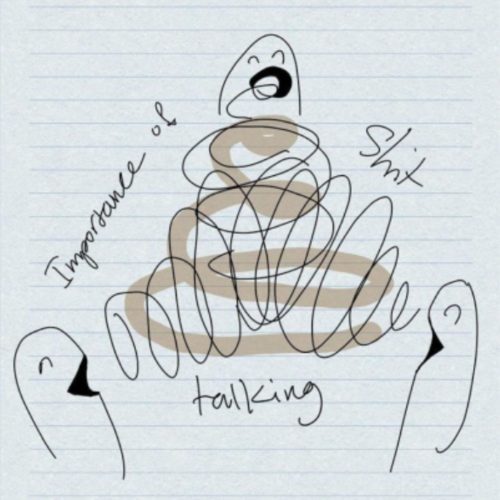
A workshop on humor and community in academic life.
Academia can be a surprisingly lonely place. As work becomes increasingly individualised, optimised, and mediated through digital tools, many of the small interactions that connect us are easily pushed aside. Supported by the finding that people are speaking up to 300 words fewer every year (Pfeifer & Mehl, 2026), we argue that conversations are needed now more than ever. Instead, we schedule meetings, communicate efficiently, and get back to work. In this way we optimise away conversations that do not appear to have a purpose.
According to Fine & Corte (2024), informal talk, specifically one with profanity and vulgarities have shown to help form communities and foster trust and solidarity among practitioners, in work environments with periods of heightened tension and stressful activity. They call these environments obscenity factories recognizing how such language can enable collaborative practices.
This workshop starts from the idea that not all talk needs to be productive. Small talk, complaining, joking, sharing memes, and general academic shittalking can create spaces for connection, reflection, and shared understanding. Through playful activities humour, and informal conversation, participants will map and explore the frustrations, absurdities, and everyday experiences of academic life.
The workshop is not about finding solutions or producing outcomes. Instead, it is an opportunity to talk, listen, laugh, complain, and discover that others might be dealing with the same things. Sometimes, talk is cheap, and that might be exactly why we need more of it.
Participation
We invite academics, practitioners, and artists from HCI, design, the humanities, and the social sciences who study, create, or simply take seriously the role of humor in the development of technology. No prior experience with humor or academic shittalk is required; we welcome participants with field experience, theoretical contributions, or mere awareness of the phenomena. To participate, we request you to bring a case that represents the workshop themes using the registration form below. The number of participants is TBD.
Registration: Please register to the workshop via this Microsoft Forms. The deadline for registration is TBD.
Authors and Affiliations: Matilda Kalving, Amir Pakpour and Ville Paananen (Tampere University, Finland)

2. Designing Multi-Reality Futures: Speculative Explorations of Seamless and Meaningful XR Experiences
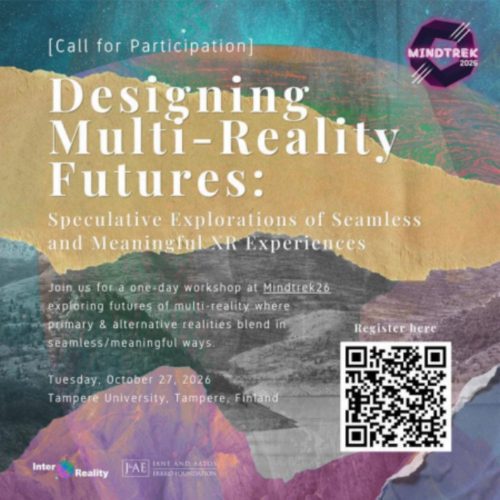
What happens when realities blend, overlap, and respond to each other?
What’s (really) going on in those in-between moments as we transition from one reality into another?
And how can we design futures where our primary realities and alternative realities coexist in ways that feel seamless/meaningful?
If these spark your curiosity or interest, we warmly invite you to join our one-day workshop:
“Designing Multi-Reality Futures: Speculative Explorations of Seamless and Meaningful XR Experiences“ conducted in conjunction with Academic MindTrek’26!
During the workshop, we will deepen our understanding of transition processes and key design elements in multi-reality experiences. In addition, we will unpack transition frictions and collaboratively envision future applications of multi-reality design through scenario development and bodystorming. Finally, we will reflect on these ideas across multiple dimensions, including political, economic, social, technological, environmental, and legal.
We welcome participants from across HCI, interaction and experience design, media studies, semiotics, telecommunication engineering, and related fields. No prior XR development experience is required, only curiosity and a willingness to speculate!
Pre-registering is required.
Time: Tuesday, October 27th, 2026
Registration: https://forms.cloud.microsoft/e/MXcL62eAm7?origin=lprLink
Authors & Affiliations: Tippayaporn Pavavimol (InterReality, Research Centre of Gameful Realities, Tampere University, Finland), Xinyan ’Shelly’ Zhao (InterReality, Research Centre of Gameful Realities, Tampere University, Finland), Cansu Çetin Er (InterReality, Research Centre of Gameful Realities, Tampere University, Finland), Noak Petersson (Department of Computer and Systems Sciences, Stockholm University, Sweden), Aleksandr Ometov (Tampere Wireless Research Centre, Tampere University, Finland), Mikko Valkama (Tampere Wireless Research Centre, Tampere University, Finland), Mattia Thibault (InterReality, Research Centre of Gameful Realities, Tampere University, Finland)
3. Alternative Research Outcomes and Presentation Formats
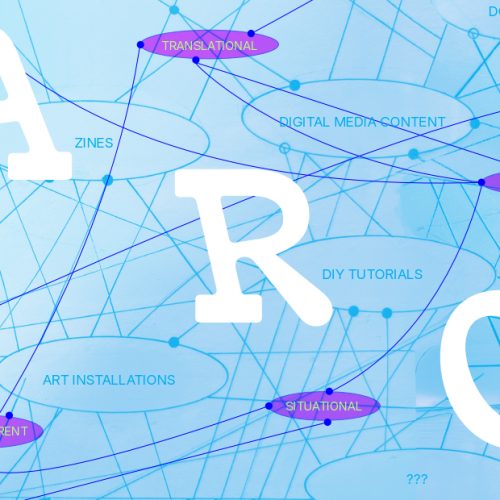
There is growing interest and initiative within the HCI and Design community to work with many different forms of research endpoints, going beyond traditional forms of reporting, or established understandings of how “results” look like.
This workshop will invite participants to learn about Alternative Research Outcomes (ARO) and presentation formats, reflect upon theirown research through an ARO lens, and reflect on the possibilities and limitations of including alternative outcomes and formats for their own research practices.
Alternative Research Outcomes are research endpoints that go beyond traditional written publications, taking many different formats, such as documentaries, DIY tutorials, public exhibitions, podcasts, zines and many more. AROs are intentionally designed in specific forms to translate, communicate, and extend research insights in ways that are meaningful to intended audiences.
Time: 7.10.2026, 10:00-17:00 EET
Please register here: Alternative Research Outcomes and Presentation Formats – Registration – Fill out form
Registration Deadline: 25.10.2026
Authors: Aska Mayer (Tampere University, Finland & Technical University of Munich, Germany), Arka Majhi (Tampere University), MinYoung Yoo (Simon Fraser University, Canada), Sophia Ppali (TU Delft, Netherlands)
4. Human-Centered Perspectives on the Role of AI in Accessibility
Half-day workshop at Academic Mindtrek 2026, Tampere, Finland + online
AI has shaped accessibility for decades. What’s working, what’s hype, and what’s missing? We’re especially seeking views on privacy, on-device AI, sustainability, and the Global South. Remote participation and live captioning are provided.
Registration: Late-breaking position statements welcome until 20 Oct.
Register here: https://forms.gle/Dan5tqDRureCh1z5A
If you have questions about the workshop, you may send them to: HCAIa11y@talkinginterfaces.org
Authors: Markku Häkkinen (ETS and University of Jyväskylä Summer School, USA), Jason White(Independent Researchers – W3C Invited Expert, USA), Helen Sullivan (Rider University and University of Jyväskylä Summer School, USA), Shriran Saharasbudhe (ETS, USA)